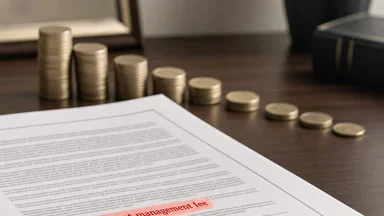
If you have checked out an online purchase recently, you have likely seen the option to "Buy now, pay later" (BNPL) from providers such as Klarna, Afterpay, or Affirm. The pitch is simple: split your payment into interest-free installments. But behind that smooth checkout experience, a less visible cost is moving through the system. Merchants pay a fee for each BNPL transaction that, on average, is about three times the interchange fee they would pay on a credit card swipe. That gap has implications for retail prices, business margins, and the overall cost of consumer credit.
The BNPL Fee Gap: 3x the Cost of a Card Swipe
When a customer pays with a credit card, the merchant pays an interchange fee that averages between 1.5% and 2.5% of the transaction amount, depending on the card network and the merchant's processing volume. For a $100 purchase, that means roughly $1.50 to $2.50 goes to the card-issuing bank and the network.
For a BNPL transaction, the merchant fee is typically 4% to 6% of the purchase price. On that same $100, the fee is $4 to $6. Some smaller merchants report rates as high as 7% for certain BNPL providers. Large retailers with negotiating power might push rates closer to 3%, but that is still above the typical credit card interchange. The result is that the BNPL fee is often three times the cost of a card swipe, and sometimes more.
Unlike credit card interchange, which is capped for debit cards under the Durbin Amendment (Regulation II) and subject to network rules, BNPL merchant fees are not regulated. Each BNPL provider sets its own rate, and retailers have limited ability to negotiate unless they process large volumes. The fee is a flat percentage of the transaction, with no cap based on transaction size, so large purchases can generate substantial costs.
Some BNPL providers also charge merchants a flat per-transaction fee (e.g., $0.30) in addition to the percentage, further increasing the cost for small-ticket items. A $20 purchase with a 5% fee plus $0.30 results in a $1.30 fee—6.5% of the transaction. Credit card interchange for small transactions is often lower in percentage terms due to fixed-fee structures, making the BNPL premium even more pronounced.
To put this in perspective, consider a typical online clothing retailer. A customer buys a $75 jacket. With a credit card, the merchant pays about $1.50 in interchange (2% rate). With BNPL at 5%, the merchant pays $3.75. That extra $2.25 per transaction may not sound like much, but for a retailer processing 1,000 BNPL transactions per month, the annual difference is $27,000—enough to cover a part-time employee's salary. For a larger retailer like a national electronics chain with 50,000 BNPL transactions monthly, the extra cost could exceed $1.3 million per year.
Who Really Pays: The Merchant's P&L Squeeze
Retail profit margins are famously thin. For many retailers, net profit margins run between 3% and 5% of revenue. A 4–6% BNPL fee can therefore eat up most or all of the profit on a transaction. A merchant selling a $50 item with a 4% margin earns $2 in profit; a 5% BNPL fee costs $2.50, turning the sale into a loss.
Smaller businesses feel this squeeze most acutely. They lack the volume to negotiate lower rates and often have less ability to absorb costs. A boutique clothing store or an independent electronics shop may see BNPL fees consume a significant portion of their already narrow margins. Some respond by raising prices across the board, effectively making all customers—including those who pay with cash or debit—subsidize BNPL users.
Larger retailers have more leverage. Chains like Walmart or Target might negotiate BNPL fees down to around 3% by promising high transaction volumes. Even at that rate, the fee is still roughly double the average credit card interchange. The net cost to the merchant, after accounting for the interchange they would have paid on a card transaction, is roughly 2–4% higher for BNPL.
This fee structure creates a perverse incentive: the payment method that is marketed as "free" for consumers actually costs merchants more than the traditional credit card system. Those costs are passed back to consumers in the form of higher prices or reduced selection. Some economists argue that BNPL effectively functions as a regressive tax, disproportionately affecting lower-income shoppers who are more likely to use installment plans.
Consider the case of a small online bookstore that started offering BNPL to compete with larger retailers. The owner reported that BNPL transactions accounted for 15% of sales but generated 40% of payment processing costs. To offset this, the bookstore raised prices by 2% across all items. Regular customers who paid by debit card were effectively subsidizing BNPL users. After six months, the owner switched to a different BNPL provider with a lower fee (3.5%) and saw margins improve, but the cost was still higher than credit card processing.
Revenue Breakdown: Where the BNPL Fee Goes
The 4–6% merchant fee is not pure profit for the BNPL provider. It covers several layers of cost. The largest share—roughly 2–3%—goes to underwriting risk. BNPL providers must assess the creditworthiness of each borrower, often using proprietary algorithms that analyze purchase history and other data. They also bear the risk of nonpayment, which runs at about 2–5% of loan balances, according to industry reports.
Payment processing fees account for another 0.5–1% of the transaction. BNPL providers rely on card networks (Visa, Mastercard) or ACH systems to move money between the merchant, the lender, and the consumer. These network fees are similar to what any payment processor would charge.
Late fees are a separate revenue stream for BNPL providers. When a consumer misses a payment, they may be charged up to $8 per missed installment under recent CFPB rules, though some providers previously charged $25 or more. Late-fee income can add 10–25% to a BNPL provider's revenue on loans that go delinquent. This creates an incentive for providers to design repayment schedules that are easy to miss, though many have moved to more transparent practices under regulatory pressure.
Marketing kickbacks are another hidden component. Some BNPL providers charge merchants additional fees for promotional placement—being featured as a payment option at checkout or in marketing emails. These fees are separate from the transaction fee and can range from a few hundred to several thousand dollars per month. For the merchant, this adds to the total cost of offering BNPL.
To illustrate the revenue split, let's break down a typical $100 BNPL transaction with a 5% merchant fee ($5 total). Approximately $2.50 goes to cover credit losses (assuming a 2.5% default rate), $0.75 to payment processing, $1.00 to technology and operations, and $0.75 to marketing and overhead. That leaves roughly $0.00–$0.50 as profit for the BNPL provider—a thin margin that explains why late fees and marketing kickbacks are so important to their business model.
The Consumer's Hidden Tab: Price Inflation and Late Fees
For consumers who pay on time, BNPL can indeed be free—no interest, no fees. But the merchant's cost does not disappear; it is built into the price of goods. Research suggests that retailers raise prices by roughly 1–3% to offset payment processing costs, including BNPL fees. A consumer who always uses BNPL may not notice, but a cash or debit user effectively subsidizes the installment option.
Late fees are the most direct cost to consumers. The CFPB's 2024 rule capped late fees at $8 per missed payment for most BNPL products, but some providers still charge more under state law exemptions. If a consumer misses two installments on a four-payment plan, they could owe $16 in fees on a $100 purchase—an effective APR that can exceed 20% when annualized, despite the 0% interest claim. For lower-income users, a single late fee can be a significant burden.
Defaults, while relatively low at 2–5%, can lead to collection activity and credit score damage. BNPL providers increasingly report missed payments to credit bureaus, which can lower a consumer's score and affect their ability to get a mortgage or car loan. The CFPB has warned that BNPL users may see a drop in credit scores even if they pay on time, because the accounts can increase their total debt load.
Another hidden cost is the psychological effect of installment payments. Studies show that consumers spend 10–20% more when using BNPL compared to paying upfront, because the smaller installment amounts feel less painful. This overspending can lead to debt accumulation, especially for consumers who use multiple BNPL plans simultaneously. The ease of signing up—often just a few clicks—can mask the cumulative obligation.
Take the example of a consumer who buys a $400 sofa using four $100 installments. They might also use BNPL for a $200 pair of shoes and a $150 kitchen appliance, all in the same month. The total monthly installment payments across these purchases could be $187.50 ($100 + $50 + $37.50), which feels manageable. But if a job loss or unexpected expense occurs, missing just one payment on each plan could trigger $24 in late fees (three plans × $8 each). Over time, this can snowball into significant debt.
Regulatory Blanks: No Interchange Cap, No CARD Act
BNPL products currently occupy a regulatory gray area. They are not classified as credit cards under the Truth in Lending Act (TILA), so they are not subject to the same disclosure requirements, interest rate caps, or fee restrictions that apply to traditional credit cards. The CARD Act of 2009, which limited late fees and required clearer disclosures for credit cards, does not apply to BNPL.
Regulation II, which caps debit card interchange fees under the Durbin Amendment, also does not cover BNPL fees. The statute applies only to debit cards issued by large banks, not to installment loans. As a result, BNPL providers can charge merchants whatever the market will bear, with no federal ceiling. Some states have stepped in: California, for example, caps BNPL late fees at $8 and requires licensing, while other states apply general usury limits that cap interest at 36% APR, but enforcement varies.
The CFPB issued a rule in 2024 that capped late fees for most BNPL products at $8, but the industry sued, arguing that the CFPB overstepped its authority. As of mid-2026, the rule is in legal limbo, with some providers voluntarily adopting the cap while others challenge it. The Federal Reserve has not taken enforcement actions specific to BNPL, though recent actions against bank employees for unrelated misconduct show that regulatory scrutiny of financial institutions remains active.
Some consumer advocates argue that BNPL should be regulated as a form of credit card under TILA, which would subject it to the same interchange fee caps and disclosure rules. Others counter that BNPL is fundamentally different—it is a short-term installment loan, not a revolving line of credit—and that over-regulation could reduce access to credit for consumers who cannot get traditional cards. The debate continues as state and federal regulators grapple with the rapid growth of this payment method.
A counter-argument worth considering is that BNPL's higher merchant fees are partly justified by the value it brings to retailers. BNPL can increase conversion rates by 20–30%, reduce cart abandonment, and attract younger consumers who may not have credit cards. For some merchants, the incremental sales generated by BNPL more than offset the higher fee. A furniture retailer, for example, might find that offering BNPL increases average order value by 15%, making the 5% fee worthwhile. However, this benefit is not universal; low-margin, high-volume retailers may struggle to see a net gain.
Three Ways to Avoid the BNPL Surcharge
For consumers who want to avoid the hidden costs of BNPL, a few strategies can help. First, using a cash-back credit card can net a rebate of 1.5–2% on purchases, effectively offsetting some of the price inflation caused by merchant fees. Paying the card balance in full each month avoids interest charges, making this a net-positive option compared to BNPL.
Second, paying with a debit card or cash eliminates the merchant fee entirely from the consumer's perspective. While the merchant still pays a small debit interchange fee (typically 0.5–1%), that cost is lower than BNPL and is already priced into goods. Some retailers even offer a small discount for cash payments, though this is less common online.
Third, if you do use BNPL, compare terms across providers. Some BNPL services, such as those offered by PayPal or certain fintechs, do not charge merchants a fee on every transaction—they may rely on subscription models or alternative revenue. Look for providers that disclose their merchant fee structure or that offer 0% APR with no late fees. Setting up autopay can help avoid late fees, which average around $8 per missed payment. And check whether the retailer offers a discount for using a specific payment method—some do, and it can save a few percentage points.
Ultimately, the BNPL fee gap is a reminder that payment systems are not free. Someone always pays, and understanding who—and how much—can help you make better choices as a consumer or a business owner.
This article is for informational purposes only and does not constitute financial, legal, or tax advice. Please consult a qualified professional for your specific situation.