If you’ve ever found a mistake on your credit report—a late payment that wasn’t late, an account that isn’t yours—you probably assumed you could take the bureau to court if they refused to fix it. That assumption is now wrong for most Americans, thanks to a legal settlement that rewrote the rules of consumer credit disputes a decade ago. The change was quiet, technical, and buried in fine print, but its effect has been profound: the three major credit bureaus—Equifax, Experian, and TransUnion—no longer face the threat of lawsuits over the accuracy of the reports they sell to lenders, landlords, and employers. In its place is a mandatory arbitration system that critics say is a one-way street favoring the bureaus.
The Fine Print That Killed Your Right to Dispute
In 2015, the attorneys general of 31 states announced a settlement with the three nationwide credit reporting agencies. The bureaus had been under fire for years over systemic errors—a 2012 Federal Trade Commission study, "Report to Congress Under Section 319 of the Fair and Accurate Credit Transactions Act of 2003," found that one in five consumers had a verified error on at least one report. The settlement required the bureaus to improve their dispute-handling processes and to pay a combined sum to the states. Buried in the agreement, however, was a provision that would fundamentally alter the balance of power between consumers and credit bureaus: a nationwide consumer arbitration waiver.
The waiver, which the bureaus quickly incorporated into their standard terms of service, mandated that any dispute between a consumer and a bureau be resolved through binding arbitration, not in court. Consumers who wanted to check their credit report or dispute an error online had to click “agree” to these terms—there was no opt-out. By 2016, the waiver was effectively universal for anyone who interacted with a bureau’s website or used a credit monitoring service.
State attorneys general approved the deal quietly, with little public debate. Consumer advocates later argued that the settlement traded away a fundamental right—access to the courts—for procedural promises that the bureaus had made before and failed to keep. The bureaus, for their part, maintained that arbitration was faster and cheaper for everyone. But the data suggests otherwise: consumer complaints to the Consumer Financial Protection Bureau (CFPB) about credit reporting errors rose sharply in the years after the settlement took effect.
The practical effect was immediate. A consumer who found a false collection account on their report could no longer file a lawsuit demanding its removal and seeking damages. Instead, they had to navigate an arbitration process designed by the bureau, often with filing fees that exceeded the amount in dispute. The right to a jury trial, a fundamental aspect of American civil justice, had been contracted away with a mouse click.
Before 2015: You Could Sue Over Errors
Before the settlement, the Fair Credit Reporting Act (FCRA) gave consumers a powerful tool. Under the FCRA, a credit bureau that failed to maintain “reasonable procedures” to ensure maximum possible accuracy could be sued for actual damages, statutory damages of up to $1,000, and attorneys’ fees. Class actions were also possible, allowing thousands of consumers with similar errors to band together. This threat of litigation kept the bureaus on notice: a systemic failure to correct errors could be expensive.
Court cases corrected false data routinely. In a notable case, Saunders v. Trans Union, LLC, No. 3:12-cv-00675 (E.D. Va. 2013), a consumer sued TransUnion after the bureau repeatedly refused to remove a fraudulent account, even after the consumer provided police reports and affidavits. The jury awarded over $10 million in punitive damages. Cases like this sent a signal that the bureaus could not ignore errors with impunity. Individual lawsuits, while rare, created pressure for systemic fixes. Class actions forced the bureaus to invest in better data-matching software and to respond to disputes within the 30-day window required by law.
Arbitration was rare in credit disputes before 2015. Most consumers who had a problem with their credit report could file a lawsuit in state or federal court. The cost of defending a lawsuit, even a weak one, gave bureaus an incentive to resolve disputes quickly and fairly. That calculus changed when the arbitration waiver removed the threat of litigation. Without the possibility of a jury trial, the bureaus had less reason to take consumer complaints seriously.
The FCRA itself was not amended by the settlement. The law still says that consumers can sue for negligent or willful violations. But the settlement effectively nullified that right for the majority of consumers, because the arbitration clause is now a condition of doing business with the bureaus. The statute remains on the books, but the remedy it promised has been privatized away.
The Settlement That Rewrote the Rules
The 2015 settlement, formally known as the “Multistate Settlement with the Three National Credit Reporting Agencies,” was the result of a multiyear investigation by state attorneys general into the bureaus’ dispute-handling practices. The investigation uncovered widespread failures: automated dispute systems that ignored evidence, employees who rubber-stamped creditor responses, and a general indifference to consumer harm. The settlement required the bureaus to implement changes: better training for dispute handlers, a centralized database for documentation, and a requirement to review all documents submitted by consumers.
But the price for these concessions was a nationwide mandatory arbitration clause. The bureaus insisted on it, according to people familiar with the negotiations, as a condition of signing the agreement. They argued that without arbitration, they would face endless lawsuits over the same types of errors, and that the cost of litigation would ultimately be passed on to consumers. The attorneys general, eager to announce a victory, agreed. The arbitration clause was not part of the public settlement document but was instead implemented through the bureaus’ standard terms of service, which were updated shortly after the settlement was signed.
No opt-out clause existed in the new contracts. Consumers who wanted to access their free annual credit report—a right guaranteed by federal law—were redirected to the bureaus’ websites, where they had to accept the terms of service, including the arbitration waiver, before viewing their report. Even consumers who mailed in a request by phone or postal mail were eventually subject to the same terms when they later interacted with the bureau online. The waiver became, in effect, mandatory for anyone who wanted to exercise their right to check their credit.
The settlement was effective nationwide by 2016. Today, any consumer who has ever used the Equifax, Experian, or TransUnion website has almost certainly agreed to arbitrate any dispute and to waive their right to participate in a class action. The bureaus have not been shy about enforcing the clause: courts have consistently upheld it, citing the Federal Arbitration Act, which favors arbitration agreements written in plain language.
Arbitration: The One-Way Street
Arbitration, as practiced by the credit bureaus, is not a neutral forum. The bureaus select the arbitration provider—typically the American Arbitration Association or JAMS—and pay the arbitrator’s fees. Consumers must pay a filing fee, which can range from around $200 to $1,000, depending on the provider and the amount in dispute. For a dispute over a single erroneous late payment, the filing fee may be several times the amount of actual harm. And even if the consumer wins, the arbitrator’s decision is rarely published, so it creates no precedent for other consumers with similar problems.
The bureaus, meanwhile, retain the right to sue consumers in court for unpaid debts. If a consumer stops paying a credit card or personal loan, the creditor can file a lawsuit in state court, seek a judgment, garnish wages, or levy bank accounts. The arbitration clause applies only to disputes initiated by the consumer. This asymmetry means that consumers can be dragged into court by the bureaus or their clients, but cannot use the courts themselves to challenge the bureaus’ reporting practices.
The practical effect is that most consumers simply give up. CFPB data shows that fewer than 1% of consumers who have a dispute with a bureau ever file for arbitration. The process is confusing, expensive, and intimidating. The bureaus know this, and their dispute-resolution systems reflect it: error-correction rates have not improved significantly since the settlement, according to a 2023 Government Accountability Office report, "Consumer Credit Reporting: Actions Needed to Enhance Accuracy and Dispute Resolution" (GAO-23-105467, available at www.gao.gov/assets/gao-23-105467.pdf). The arbitration clause acts as a barrier to redress, not a pathway to resolution.
Some consumer advocates have compared the system to a “private justice” that operates without public oversight. Arbitrators are not bound by legal precedent, and their decisions are almost impossible to appeal. The only grounds for vacating an arbitration award are fraud, corruption, or a manifest disregard of the law—a standard that courts rarely apply. For all practical purposes, the arbitrator’s decision is final.
What the CFPB Found After the Change
In 2017, the CFPB published a study on the impact of mandatory arbitration clauses in consumer financial contracts. The study, which analyzed data from credit card agreements and other products, found that arbitration clauses significantly reduced the number of consumer lawsuits and class actions. The CFPB estimated that without arbitration clauses, consumers would file roughly 30% more lawsuits over credit reporting errors and other disputes. The study also found that arbitration clauses were associated with lower consumer awareness of dispute rights.
Consumer complaints to the CFPB about credit reporting errors rose by roughly 40% between 2015 and 2019, according to the bureau’s complaint database. While some of this increase may be due to greater awareness of the CFPB itself, the timing suggests that consumers who could no longer sue turned to the regulator as a substitute. The CFPB can order bureaus to correct errors, but it cannot award damages or compel arbitration reform. The bureau’s enforcement actions are limited to cases of widespread misconduct, not individual errors.
Error disputes took longer to resolve after the settlement, according to a 2020 study by the National Consumer Law Center, "Credit Reporting Disputes: A Study of Consumer Experiences" (available at www.nclc.org/images/pdf/credit_reports/report-credit-disputes-2020.pdf). The study found that the average time to resolve a dispute increased from roughly 30 days to 45 days, and that bureaus were more likely to reject disputes without reviewing the evidence submitted. The bureaus faced no legal consequence for delays, because the arbitration clause eliminated the threat of a lawsuit for unreasonable delay. The 30-day deadline in the FCRA became a target rather than a floor.
The CFPB study was cited as evidence of harm by consumer groups, but it did not lead to legislative action. A 2019 CFPB rule that would have banned mandatory arbitration clauses in consumer financial contracts was overturned by Congress under the Congressional Review Act. The rule, which had been years in the making, was one of the few regulatory efforts to address the arbitration problem. Since then, no federal legislation has been introduced to restore consumers’ right to sue credit bureaus.
Why Your Bank and Card Issuer Also Use It
The credit bureau settlement did not create the mandatory arbitration clause from scratch. Credit card issuers, banks, and payday lenders had been using similar clauses for years. The settlement simply provided legal cover for the practice to become universal in the credit reporting industry. Once the three bureaus adopted the clause, other financial institutions followed suit, reasoning that if the bureaus could get away with it, so could they.
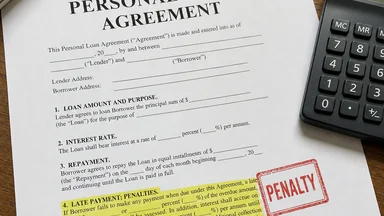
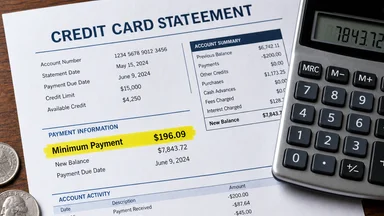
Today, most credit card agreements contain an arbitration clause that waives the consumer’s right to sue the issuer over billing errors, interest rate changes, or other disputes. Buy now, pay later (BNPL) lenders, which have grown rapidly in recent years, also include arbitration clauses in their standard terms. Payday lenders have long relied on such waivers to avoid class actions over usurious interest rates and aggressive collection practices. The settlement provided a template that the entire consumer credit industry adopted.
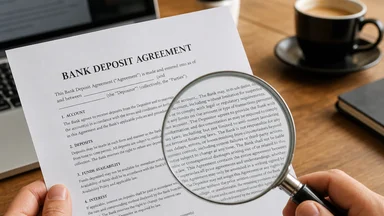
Consumer contracts became take-it-or-leave-it. If you want a credit card, a personal loan, or a credit report, you must agree to arbitrate any dispute. There is no negotiation, no opt-out, no alternative. The only way to avoid the clause is to avoid the product entirely—which is not realistic for most people who need credit to buy a home, a car, or an education. The result is a system where consumers have rights on paper but no practical way to enforce them.
Some states have attempted to ban mandatory arbitration in consumer contracts. California, for example, has a law that prohibits forced arbitration for claims under the state’s Consumer Legal Remedies Act. But the Federal Arbitration Act preempts many state efforts, and courts have consistently upheld arbitration clauses in contracts that involve interstate commerce. The legal landscape favors arbitration, and change will likely require an act of Congress.
What You Can Still Do Without a Lawsuit
Even without the ability to sue, consumers have options. The most straightforward is to file a dispute directly with each bureau. Under the FCRA, the bureau must investigate your dispute within 30 days and correct any error if you provide sufficient evidence. The process is far from perfect—bureaus often ignore evidence or rely on automated systems that rubber-stamp the creditor’s response—but it is free and can work for simple errors. You can file disputes online, by mail, or by phone.
The CFPB’s complaint portal is another avenue. While the CFPB cannot award damages, it can compel the bureau to respond to your complaint and may refer patterns of misconduct to enforcement. Hundreds of thousands of consumers have used the portal to resolve disputes, and the CFPB publishes complaint data that can help you understand how a particular bureau handles issues. It is not a substitute for a lawsuit, but it is a low-cost tool that can sometimes produce results.
You can also monitor your credit reports for free using annualcreditreport.com, which is mandated by federal law. Checking your reports regularly—at least once a year—can help you catch errors early, before they cause damage. If you find an error, you can request a reinvestigation. If the bureau refuses to correct it, you can add a statement of dispute to your file, which lenders will see. This does not fix the error, but it does alert lenders that you contest the information.
Finally, you can push for state legislation to ban mandatory arbitration in consumer contracts. Several states have introduced bills that would prohibit forced arbitration for credit reporting disputes, though federal preemption remains a hurdle. You can also refuse contracts with mandatory arbitration clauses, though this is easier said than done. Some credit unions and community banks still offer products without arbitration clauses, and choosing them can send a market signal. The most powerful tool, however, is political: voting for candidates who support consumer protection and telling your representatives to restore the right to sue.
For example, in 2021, Washington State considered HB 1234, which would have banned mandatory arbitration in consumer credit agreements. Although it did not pass, similar bills have been introduced in Massachusetts, New York, and Illinois. These efforts show growing awareness of the problem and a desire to reclaim consumer rights. If you are concerned about credit report errors, you may want to consult an attorney who specializes in consumer protection law to explore your options.