You shop for a personal loan, compare APRs, and pick the one with the lowest rate. The lender offers an extra discount if you set up automatic payments. You sign, feeling good about the deal. Then you receive a year-end bonus from your employer and decide to pay off the loan early. You call the lender to request a payoff quote, only to discover a prepayment penalty that wipes out the savings you thought you had. This scenario is more common than most borrowers realize, and the fine print can turn a smart financial move into a costly mistake.
Prepayment penalties on personal loans are fees lenders charge when you pay off all or part of the loan before the scheduled term ends. The Consumer Financial Protection Bureau (CFPB) has noted that roughly 40% of personal loans carry some form of prepayment penalty, though the exact figure varies by lender and loan type. These penalties are designed to compensate the lender for the interest they lose when a loan is paid off early.
The Fine Print That Erases Your Rate Benefit
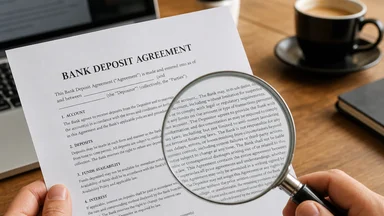
When you take out a personal loan, the interest rate is the headline number. Lenders compete on rate, and a difference of a few percentage points can save you hundreds of dollars over the life of the loan. But the prepayment penalty is buried in the fine print of the promissory note—often on page 10 or 11, in a section titled "Prepayment" or "Prepayment Privilege." The Truth in Lending Act (TILA) requires lenders to disclose the penalty, but it does not mandate that the disclosure be prominent or easy to understand.
Penalty calculation methods vary widely. Some lenders charge a flat fee, like $150 or $250, regardless of the balance. Others use a percentage of the outstanding principal—commonly 2% to 5%—which can be substantial on a large loan. A third method is a tiered schedule: 5% of the balance if you pay off in the first year, 3% in the second, and 1% in the third. This structure is designed to discourage early payoff when the lender's interest loss is greatest.
The CFPB has taken enforcement actions against lenders for deceptive marketing of prepayment penalties. In a 2023 enforcement action against a major online lender, the CFPB alleged that the lender advertised a low rate but did not clearly disclose that the rate was contingent on autopay and that early payoff would trigger a penalty. Borrowers who signed up for autopay to get the discount found themselves locked in—if they paid off early, they lost the discount retroactively and faced a penalty. The result was a net cost higher than the original rate.
Borrowers often discover the penalty only after they have signed the loan agreement and initiated the payoff. By then, it is too late to negotiate. The penalty is deducted from the payoff amount, and the borrower is left with a smaller refund or a larger final payment than expected. This surprise can be particularly painful for those who borrowed to consolidate debt and planned to pay off the loan quickly.
How a 3% Rate Discount Became a Net Loss
Consider a case similar to one examined by the CFPB in a 2024 supervisory highlight. A borrower in Virginia took out a $15,000 personal loan to consolidate credit card debt. The lender offered a 10% APR, but with automatic payments, the rate dropped to 7%—a 3% discount that would save her roughly $450 in interest over a three-year term. She signed up for autopay and began making monthly payments.
Eighteen months later, the borrower received a $10,000 bonus from work. She decided to pay off the remaining balance of roughly $8,500. She called the lender to get a payoff quote and was told there would be a prepayment penalty of 5% of the outstanding balance—$425. The interest she had saved so far from the 3% discount was about $225. The penalty exceeded her savings by $200. In effect, the low rate she thought she had was an illusion.
The key lesson is that a rate discount tied to autopay can be a double-edged sword. The discount reduces your monthly payment, but it also makes the lender more reluctant to let you go early. If you pay off the loan before the term ends, the lender loses the interest they would have earned over the remaining months. The prepayment penalty is their hedge against that loss.
How Lenders Structure the Prepayment Trap
Lenders use tiered penalty schedules to maximize the disincentive for early payoff. A common structure is 5% of the outstanding balance if you pay off in the first year, 3% in the second, and 1% in the third. Since the average personal loan term is three to five years, borrowers who pay off early—often because they have the cash—face the highest penalty. The trap is that the people most likely to pay off early are those who are financially responsible or get a windfall, exactly the borrowers lenders want to discourage. The trap is compounded by the autopay discount. To get the low rate, you must set up automatic payments from your bank account. That means the lender has direct access to your funds, making it harder to switch lenders or negotiate. If you decide to pay off the loan early, you must contact the lender, request a payoff quote, and then send a payment—all while the penalty is calculated based on the balance at the time of payoff.
Some lenders apply the penalty only to the principal portion of the payoff, while others apply it to the entire balance including accrued interest. A few lenders waive the penalty if you pay off the loan with funds from another loan from the same institution, but that is rare. The variation makes it essential to read the fine print before signing.
Borrowers who consolidate debt with a personal loan often plan to pay it off quickly to save on interest. But if the loan carries a prepayment penalty, the quick payoff can backfire. A borrower who takes out a $10,000 loan at 8% over three years and pays it off in 12 months might save $400 in interest but face a $500 penalty—a net loss of $100. The trap is real, and it is widespread.
Why Lenders Hide the True Cost of Early Payoff
The Truth in Lending Act requires lenders to disclose the prepayment penalty in the loan agreement, but the disclosure is often buried in dense text. The penalty may be mentioned in a section called "Prepayment Privilege" or "Right to Prepay," but the dollar amount or percentage is not always prominent. Online loan calculators, which borrowers use to compare offers, rarely factor in prepayment fees. The marketing materials emphasize the low rate and the autopay discount, not the penalty.
In a 2024 enforcement action, the CFPB fined a lender for failing to clearly disclose the terms of its loan products, including prepayment penalties. While the details are specific to that case, the pattern is common: lenders design disclosures that meet legal requirements but are not user-friendly. The result is that many borrowers do not understand the true cost of early payoff until it is too late.
Lenders argue that prepayment penalties are necessary to cover their costs. When a loan is paid off early, the lender loses the expected interest income and must find a new borrower to reinvest the funds. The penalty compensates for that loss and for the administrative costs of processing the early payoff. Some lenders also argue that penalties allow them to offer lower rates to all borrowers, because they can count on a certain amount of interest income over the loan term.
Consumer advocates counter that the penalties are often excessive and that lenders could simply charge a higher rate to cover the risk of early payoff. They point to lenders like SoFi and Marcus by Goldman Sachs, which offer personal loans with no prepayment penalty and still manage to be profitable. The absence of a penalty at these lenders suggests that penalties are not a necessary cost of doing business but a way to extract more money from borrowers who are financially disciplined.
Comparing Penalty Structures Across Major Lenders
Not all personal loans carry prepayment penalties, and the ones that do vary widely. SoFi, a major online lender, explicitly states that it charges no prepayment penalty on its personal loans. The same is true for Marcus by Goldman Sachs, which also offers a rate discount for autopay but does not penalize early payoff. These lenders are popular among borrowers who want flexibility.
LendingClub, a peer-to-peer lending platform, charges a prepayment penalty of up to 5% of the outstanding balance, though the exact amount depends on the loan terms. The penalty is disclosed in the loan agreement, but it is not always obvious to borrowers who focus on the APR. Upstart, another online lender, uses a tiered penalty based on the loan age and amount, typically 5% in the first year and 3% in the second.
Credit unions often have more borrower-friendly terms. Many credit unions charge no prepayment penalty on personal loans, but they may have higher origination fees or stricter membership requirements. The trade-off is worth considering: a credit union loan with a slightly higher APR but no penalty may be cheaper overall if you plan to pay off early.
Traditional banks are mixed. Some, like Wells Fargo and Bank of America, charge prepayment penalties on personal loans, while others do not. The penalty is often a flat fee or a percentage of the balance, and it may be negotiable if you ask before signing. The key is to shop around and compare not just the APR but the penalty terms.
For borrowers who want to avoid the penalty trap entirely, the best strategy is to choose a lender that explicitly states "no prepayment penalty" in its marketing materials. SoFi, Marcus, and several credit unions fit this description. If you are considering a loan from a lender that charges a penalty, ask for the penalty to be waived or reduced in exchange for a slightly higher rate. Some lenders will agree, especially if you have good credit.
How to Calculate Whether Early Payoff Pays Off
If you already have a personal loan with a prepayment penalty, you can calculate whether paying it off early makes financial sense. The formula is simple: total interest saved minus the prepayment penalty. If the result is positive, early payoff is a net gain. If negative, you are better off keeping the loan and investing the extra cash elsewhere.
To estimate the interest saved, you need the loan's amortization schedule, which shows how much interest you will pay each month. You can find this schedule in your loan documents or use an online amortization calculator. For example, a $10,000 loan at 10% APR over three years will have total interest of roughly $1,616. If you pay it off after 18 months, you will have paid about $800 in interest, saving roughly $816. If the prepayment penalty is 3% of the remaining balance—say $300—your net gain is about $516. That is a clear win.
But if the penalty is 5% of the original balance—$500—your net gain drops to $316. And if you have a longer-term loan with a higher penalty, the math can flip. For a $20,000 loan at 8% over five years, paying off after two years saves about $1,200 in interest, but a 5% penalty on the remaining balance of roughly $13,000 is $650, leaving a net gain of $550. Still positive, but much smaller than the headline savings.
Online prepayment penalty calculators, such as those on Bankrate or NerdWallet, can do the math for you. You input the loan amount, rate, term, months paid, and penalty percentage, and the tool shows the net savings. These calculators are a useful check before you write the payoff check.
One nuance: if the penalty is a flat fee rather than a percentage, the math is simpler. A $250 flat fee on a $5,000 loan paid off early might be worth it if you save $300 in interest. But on a $15,000 loan, the same $250 fee is a smaller percentage of the savings. The key is to run the numbers for your specific loan.
Three Strategies to Avoid the Penalty Trap
The first and most important strategy is to read the promissory note's "prepayment" section before you sign. Look for the words "prepayment penalty" or "prepayment fee." If the document is unclear, ask the lender to explain in writing. Do not rely on verbal assurances. If the lender charges a penalty, ask for it to be waived or reduced. Some lenders will agree if you have a strong credit profile or if you are willing to accept a slightly higher rate.
Second, choose a lender known for no-penalty policies. SoFi, Marcus, and many credit unions offer personal loans without prepayment penalties. Even if their rates are slightly higher than a lender with a penalty, the flexibility can be worth the difference. A loan with a 9% APR and no penalty may be cheaper overall than a loan with a 7% APR and a 5% penalty, especially if you plan to pay off early.
Third, consider alternatives to personal loans that do not carry prepayment penalties. Balance transfer credit cards, for example, often offer 0% APR for 12 to 18 months with no prepayment penalty—you can pay off the balance at any time without a fee. The catch is that you need good credit and a high enough credit limit. Another alternative is a home equity line of credit (HELOC), which typically has no prepayment penalty, but it is secured by your home and carries its own risks.
If you already have a loan with a penalty and want to pay it off early, negotiate with the lender. Explain your situation and ask for a waiver or reduction. Lenders sometimes grant partial waivers to retain goodwill, especially if you have been a good customer. It never hurts to ask.
Finally, consider using a personal loan for a shorter term to minimize the penalty risk. A two-year loan will have a smaller penalty than a five-year loan, because the lender's expected interest income is lower. The monthly payment will be higher, but the total interest paid will be less, and the penalty will be a smaller share of the balance.
Prepayment penalties are not inherently evil—they compensate lenders for a real cost. But they are often structured in ways that are opaque and can trap unwary borrowers. Understanding how they work and shopping carefully can help you avoid a fee that negates your rate discount.
This article is for informational purposes only. Loan terms vary by lender and jurisdiction. Always read your loan agreement carefully and consult a qualified professional for personalized guidance.