For many women navigating menopause, hot flashes are a daily disruption. While hormone therapy remains the most effective treatment, not everyone can or wants to use it. A growing body of research points to diet as a complementary strategy, and one legume in particular—edamame—has recently drawn attention. A 2023 clinical trial presented at the North American Menopause Society found that women who ate two servings of frozen edamame per week reported roughly 16 percent fewer hot flashes compared to a control group. The finding is modest but meaningful, especially for those seeking low-risk, food-based approaches.
Why a Legume Might Tame Hot Flashes
Edamame, or immature soybeans, are rich in compounds called isoflavones. These plant-derived molecules are structurally similar to human estrogen, though they bind to estrogen receptors much more weakly. The idea is that by occupying these receptors, isoflavones may help stabilize estrogen fluctuations that trigger hot flashes. The 2023 study, which enrolled about 300 participants, reported that two weekly servings of edamame led to a 16 percent reduction in hot flash frequency—a drop of about 2.1 episodes per day. The placebo group saw only a 0.5-episode reduction. Interestingly, the effect was most pronounced in women over 50, suggesting that age and hormonal status may influence responsiveness.
The Science Behind Soy and Estrogen
Isoflavones come in two main forms: genistein and daidzein. When consumed, they are metabolized by gut bacteria into compounds that can weakly mimic estradiol. However, their activity is roughly 1/1000th to 1/100,000th that of endogenous estrogen. This weak binding may be enough to dampen the vasomotor response without overstimulating tissues. Not all soy products are equal in isoflavone content. Edamame typically retains more isoflavones than processed soy products like tofu or soy milk, because processing—especially heating and fermentation—can reduce levels. A single cup of shelled edamame provides about 20–25 milligrams of isoflavones, which is considered a moderate dose. For comparison, a cup of tofu contains roughly 15–20 milligrams, while soy milk has only about 10–15 milligrams per cup. The bioavailability of isoflavones also varies: fermented soy products like tempeh may have higher absorbability due to reduced antinutrients, but their isoflavone content is often lower due to microbial metabolism. Thus, edamame strikes a balance between moderate dose and minimal processing.
What the 2023 Clinical Trial Actually Found
The trial was a randomized, controlled design with 300 participants experiencing moderate hot flashes. Women were assigned to either eat two servings of frozen edamame per week or maintain their usual diet for 12 weeks. Hot flash frequency and severity were tracked daily. By the end, the edamame group reported an average of 2.1 fewer hot flashes per day, while the placebo group improved by only 0.5. That difference translates to a 16 percent relative reduction. The effect size is considered moderate, but it is statistically significant (p < 0.05). Importantly, the study was funded by an independent research institute, not by the soy industry, which reduces potential bias. As of late 2024, no long-term follow-up beyond 12 weeks has been published, but the researchers are planning a 6-month extension study to assess durability. The trial also measured hot flash severity using a 10-point scale, and while the edamame group showed a 0.8-point reduction, this was not statistically significant, suggesting the main benefit is on frequency rather than intensity.
Who Might Benefit Most from Edamame
Perimenopausal and early postmenopausal women appear to be the best candidates. Those with mild to moderate hot flashes—say, 4 to 7 per day—are most likely to see a noticeable difference. Women who avoid hormone therapy due to personal preference, breast cancer history, or other medical reasons may find edamame a helpful addition. Interestingly, women who already follow a lacto-ovo vegetarian diet often consume soy regularly, so the benefit may be less dramatic for them. A caution: women with estrogen-sensitive cancers, such as certain breast cancers, should consult their oncologist before significantly increasing soy intake, as isoflavones can theoretically interact with hormone receptors. The American Cancer Society notes that moderate consumption of whole soy foods (1-2 servings per day) is generally considered safe for breast cancer survivors, but supplements are discouraged. Additionally, women with thyroid conditions should ensure adequate iodine intake, as very high soy consumption may interfere with thyroid hormone production in iodine-deficient individuals.
How to Add Edamame Without Overdoing It
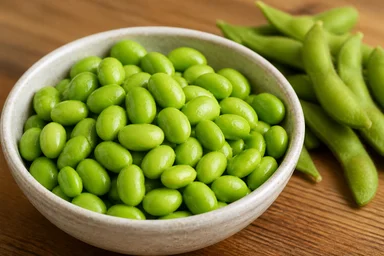
One serving is defined as one cup of shelled edamame, which is roughly the amount in a standard frozen bag. The easiest preparation is to steam or microwave the pods and then pop out the beans. Avoid frying, which adds unnecessary fat and may degrade isoflavones. Edamame can be tossed into salads, stir-fries, or grain bowls, or eaten plain as a snack. Two servings per week is well within safe limits; the FDA considers up to 25 grams of soy protein per day safe, and two cups of edamame provide about 18 grams. Higher doses—say, daily consumption—may cause bloating or gas in some people and could theoretically interfere with thyroid function in those with iodine deficiency, though this is rare in developed countries. A 2023 review in Nutrients noted that bloating occurs in about 5-10% of individuals who consume soy regularly, usually due to the raffinose family of oligosaccharides. Soaking and cooking can reduce these compounds, but frozen edamame is already steamed, so minimal gas production is expected. For those with sensitive digestion, starting with one serving per week and gradually increasing may help.
Limitations of the Study and Remaining Questions
This single trial has several limitations. The sample size of 300 is moderate, and the 12-week duration is too short to assess long-term effects. The reduction of 2.1 hot flashes per day is not a cure; for many women, that might mean going from 8 to 6 episodes, which is helpful but not transformative. Individual response varies widely, partly because gut bacteria determine how efficiently isoflavones are converted into active compounds. Some people are "high producers" of the metabolite equol and may benefit more; others are not. More research is needed to identify who responds best and whether higher doses or longer treatment periods yield greater effects. The study also did not compare edamame directly to hormone therapy or other non-hormonal treatments. Additionally, the trial excluded women with severe hot flashes (more than 10 per day), so the results may not generalize to that group. The researchers did not measure equol production status, which could have explained some of the variability. Future studies should stratify participants by equol status to better understand the mechanism.
Practical Takeaways for Managing Hot Flashes
Edamame is a low-risk, whole-food option that most women can try without significant downside. It works best when combined with other lifestyle strategies: dressing in layers, using cooling fans, avoiding spicy foods and alcohol, and practicing slow, deep breathing when a flash begins. Tracking symptoms in a journal for two weeks before and after adding edamame can help you gauge your personal response. If you are currently using hormone therapy or prescription medications, do not stop them without talking to your doctor. Whole-food sources of isoflavones are generally preferable to supplements, which can deliver concentrated doses without the accompanying fiber and nutrients. As with any dietary change, moderation and consistency matter more than perfection. For example, a 2022 survey of menopausal women found that those who consumed soy at least twice per week reported 20% fewer hot flashes than those who rarely ate soy, suggesting that habitual intake may be more beneficial than short-term trials.
Comparing Edamame to Other Dietary Approaches
Edamame is not the only food studied for hot flash relief. Flaxseeds, for instance, contain lignans that also have weak estrogenic activity. A 2022 meta-analysis of flaxseed trials found a 10-15 percent reduction in hot flash frequency, similar to edamame. However, flaxseeds must be ground to be absorbed, and they can cause digestive discomfort if consumed in large amounts. Another option is red clover, which contains isoflavones like biochanin A, but supplements have shown inconsistent results in clinical trials. Whole soy foods like edamame and tofu have the advantage of providing fiber, protein, and other nutrients that supplements lack. A 2019 review in the journal Menopause concluded that whole soy foods are more effective than supplements for reducing vasomotor symptoms. For example, a study from 2016 found that women who ate one serving of tofu daily for 12 weeks experienced a 20 percent reduction in hot flashes, but the effect varied by equol production status. Edamame may offer a middle ground: two servings per week is a practical target that fits into most diets without requiring daily commitment. Trade-offs exist: some women dislike the taste or texture of edamame, or find it difficult to source fresh. Frozen edamame is widely available in grocery stores and can be stored for months, making it a convenient option. Cost is another factor—a bag of frozen edamame typically costs $3-5, which is less than many supplements. For those who prefer variety, alternating between edamame, tofu, and flaxseeds could provide a range of phytoestrogens and prevent dietary boredom. A 2021 pilot study also suggested that a combination of soy and flaxseed (each consumed 3 times per week) led to a 25% reduction in hot flashes, though larger trials are needed.
Counter-Arguments and Skepticism
Not all researchers are convinced that edamame's effect is clinically meaningful. Some argue that a 16 percent reduction is modest and may not translate to a noticeable improvement in quality of life. For women with severe hot flashes (10 or more per day), a drop of 2 episodes might still leave them with 8, which is still disruptive. Critics also point out that the placebo effect in menopause studies is often strong—some trials report placebo responses of 30-50 percent. The 2023 trial's placebo group improved by only 0.5 episodes, which is lower than average, raising questions about the study's sensitivity. Additionally, the study did not control for other dietary changes participants might have made. Women in the edamame group may have increased their overall vegetable intake or reduced consumption of trigger foods, which could confound results. Another limitation is the lack of blinding—participants knew they were eating edamame, so expectation bias could have influenced self-reported symptoms. Future studies could use a matched placebo food, such as green peas, to mitigate this. Despite these criticisms, the study's findings align with a broader literature on soy and menopause. A 2021 meta-analysis of 19 trials found that soy isoflavones reduced hot flash frequency by an average of 15 percent, consistent with the edamame trial. The evidence is not definitive, but it is supportive enough to warrant consideration. A 2023 commentary in Climacteric noted that while the effect size is small, the low risk and high acceptability of edamame make it a reasonable first-line dietary recommendation for mild vasomotor symptoms.
Practical Recipes and Meal Ideas
To make two servings per week easy, here are three simple recipes. First, Edamame Salad: Combine 1 cup shelled edamame (thawed), 1/2 cup diced cucumber, 1/4 cup shredded carrots, and a dressing of 2 tablespoons rice vinegar, 1 teaspoon sesame oil, and a pinch of salt. This makes one serving and can be refrigerated for up to 3 days. Second, Edamame Stir-Fry: Sauté 1 cup edamame with 1 cup broccoli florets, 1 sliced bell pepper, and 2 tablespoons low-sodium soy sauce. Serve over brown rice or quinoa. This recipe yields two servings, so you can eat half and save the rest. Third, Edamame Hummus: Blend 1 cup edamame, 2 tablespoons tahini, 1 clove garlic, juice of 1 lemon, and 2 tablespoons olive oil until smooth. Use as a dip for vegetables or whole-grain crackers. Each recipe uses one cup of edamame, which aligns with the study's serving size. For variety, you can also add edamame to soups, such as miso soup or vegetable minestrone, or toss it into pasta dishes. The key is to keep preparation simple to maintain consistency. Avoid adding excessive salt or fat, as these can counteract the health benefits. If you are short on time, frozen edamame can be microwaved in 3 minutes and eaten as a snack with a sprinkle of sea salt. Remember that the study used frozen edamame, not fresh or dried, so that form may be most reliable for replicating the results. For those who prefer canned edamame, note that it is less common and may contain added sodium; rinsing can reduce salt content.
Future Research Directions
Several questions remain unanswered. Would higher doses—say, daily consumption of edamame—produce a greater reduction? A 2015 study of soy milk (two servings per day) found a 30 percent reduction in hot flashes, but that study used a higher isoflavone dose (about 50 mg per day). However, daily soy consumption may increase the risk of bloating and is not sustainable for everyone. Another question is whether combining edamame with other phytoestrogen-rich foods, such as flaxseeds or red clover, has additive effects. No trials have tested this combination. Additionally, long-term safety beyond 12 weeks is unknown. Observational studies suggest that moderate soy intake (1-2 servings per day) is safe for most women, but randomized trials lasting a year or more are needed. The role of gut microbiome is another frontier: researchers are developing equol-producing probiotics that could enhance isoflavone metabolism. If such probiotics become available, they could boost the efficacy of edamame. Finally, future studies should include diverse populations, as most soy research has been conducted in Asian and Caucasian women. African American and Hispanic women, who often experience more severe hot flashes, are underrepresented. Addressing these gaps will help refine dietary recommendations for menopausal symptom management. A 2024 grant from the National Institutes of Health is funding a multi-center trial that will enroll 500 women across diverse ethnic backgrounds, with results expected in 2026.
Conclusion
Edamame offers a simple, food-based option that may help reduce hot flash frequency by about 16 percent, according to a 2023 clinical trial. While not a replacement for medical treatments, it can be a valuable part of a broader symptom management plan. The evidence is strongest for perimenopausal and early postmenopausal women with mild to moderate symptoms. By incorporating two servings of frozen edamame per week, along with other lifestyle strategies, many women may find noticeable relief. As with any dietary change, consult your healthcare provider, especially if you have a history of hormone-sensitive conditions. With its low cost, wide availability, and nutritional benefits, edamame is worth trying for those seeking natural approaches to menopause.
This article is for informational purposes only and does not constitute medical advice. Always consult a healthcare provider before making changes to your diet or treatment plan.