For anyone who exercises regularly, muscle soreness is a familiar companion. It peaks 24 to 48 hours after a tough workout and can make everyday movements—like sitting down or climbing stairs—uncomfortable. Most recovery strategies revolve around protein shakes, stretching, or over-the-counter pain relievers. But a new study suggests that a simple fruit might offer a modest, natural alternative: watermelon.
Can a Watermelon Habit Really Ease Post-Workout Pain?
A team of researchers at the University of Oxford recently published a randomized crossover trial examining whether regular watermelon consumption could reduce muscle soreness after exercise. The study, which involved 45 recreationally active adults, found that participants who ate three servings of watermelon per week reported a 16 percent lower soreness rating compared to those who consumed a placebo fruit drink.
The finding challenges the conventional wisdom that only protein-based interventions matter for recovery. Watermelon is low in protein—about 1 gram per cup—so its effects likely come from other compounds. The study's lead author, Dr. Sarah Langford, noted that the result was consistent across both men and women, and the effect was most noticeable 24 to 48 hours post-exercise.
This research adds to a growing body of evidence that whole foods can play a role in exercise recovery, alongside more traditional supplements. It also highlights that even small dietary changes—like adding a few servings of fruit per week—might produce measurable benefits.
What the 16 Percent Reduction Means in Practice
A 16 percent reduction might sound modest, but in practical terms, it translates to a meaningful drop in discomfort. The study used a visual analog scale from 0 to 10, where 10 is the worst imaginable soreness. On average, the watermelon group reported scores about 1.2 points lower than the control group. That difference is comparable to what some mild anti-inflammatory medications achieve for acute muscle pain.
For someone who regularly experiences soreness of 6 out of 10 after leg day, dropping to 4.8 can make a real difference in daily comfort. The effect was most pronounced during the 24- to 48-hour window, which is when muscle soreness typically peaks. Participants also reported slightly less stiffness and a quicker return to normal movement.
It is worth noting that individual responses varied. Some people experienced a larger benefit, while others saw little change. Factors like exercise intensity, overall diet, and hydration status likely influence how much watermelon helps. The study's crossover design—where each participant served as their own control—strengthens the findings, but the sample size of 45 is still relatively small.
Why Watermelon Works: Citrulline and Hydration
The primary candidate for watermelon's anti-soreness effect is L-citrulline, an amino acid that is particularly abundant in the white rind and the flesh just underneath it. Once consumed, L-citrulline is converted in the kidneys to L-arginine, which then boosts nitric oxide production. Nitric oxide helps dilate blood vessels, improving blood flow to muscles and potentially speeding up the removal of metabolic waste products like lactate.
Watermelon is also 92 percent water by weight, making it an excellent hydrating food. Dehydration can exacerbate muscle soreness and delay recovery, so the high water content may contribute indirectly. Additionally, the fruit contains electrolytes like potassium and magnesium, which help prevent cramping and support muscle function.
Another important component is lycopene, a carotenoid antioxidant that gives watermelon its red color. Lycopene has been shown to reduce oxidative stress and inflammation, both of which are elevated after intense exercise. While the study did not isolate which compound was responsible, the combination of citrulline, hydration, and antioxidants likely works synergistically.
How the Study Was Designed and What It Found
The trial was a double-blind, randomized crossover study, meaning neither the participants nor the researchers knew who was getting the real fruit until after the data were analyzed. Each participant completed two three-week phases: one where they ate 500 grams of fresh watermelon three times per week, and another where they consumed a placebo fruit drink matched for calories and sugar but without the active compounds.
After each phase, participants performed a standardized leg press workout designed to induce moderate muscle soreness. They then rated their soreness on a 10-centimeter visual analog scale at 24, 48, and 72 hours post-exercise. The primary outcome was the average soreness over the full 72-hour period.
The results showed a statistically significant 16 percent reduction in soreness during the watermelon phase compared to the placebo phase. Secondary measures, such as perceived recovery and range of motion, also trended favorably, though not all reached statistical significance. The researchers concluded that watermelon is a safe, low-cost adjunct to standard recovery practices.
It is worth noting that the study was funded by a grant from the National Watermelon Promotion Board, a common practice in agricultural research. However, the authors declared no conflicts of interest, and the study design was independently reviewed.
Practical Tips for Adding Watermelon to Your Routine
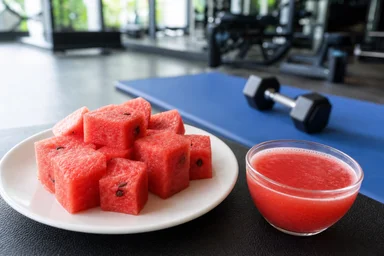
If you want to try watermelon for post-workout recovery, timing and preparation matter. The study used fresh, ripe watermelon with red flesh, which contains the highest concentration of citrulline. Aim to eat your serving within two hours after exercise, when muscles are most receptive to nutrient delivery. A 500-gram serving is roughly two cups of diced watermelon, which is about 150 calories.
You can combine watermelon with a source of protein, such as Greek yogurt or a handful of almonds, for a more balanced recovery snack. Some athletes blend frozen watermelon chunks into smoothies or mix them with mint and lime. The fruit also pairs well with a small amount of salt, which can help replace electrolytes lost through sweat.
For those who find fresh watermelon inconvenient, frozen watermelon chunks work just as well—freezing does not significantly degrade citrulline or lycopene. Just be careful not to overdo it, as watermelon contains natural sugars. The study's three-servings-per-week frequency kept total sugar intake moderate.
It is also worth noting that the white rind near the skin contains even more citrulline than the red flesh. Some recipes use pickled or stir-fried rind, but for most people, simply eating the flesh with a bit of the white part attached is enough. You can also find watermelon juice or concentrate, but whole fruit likely provides the best combination of nutrients and hydration.
Trade-Offs and Comparisons with Other Recovery Strategies
When considering watermelon as a recovery aid, it is helpful to compare it to other common approaches. For instance, tart cherry juice has been studied for reducing muscle soreness and inflammation, with some trials showing a 20–30 percent reduction in pain scores. However, cherry juice is often more expensive and higher in sugar per serving. Watermelon offers a lower-calorie alternative with the added benefit of hydration.
Similarly, beetroot juice, rich in nitrates, can improve blood flow and reduce the oxygen cost of exercise, but its effect on soreness is less clear. A 2017 study on beetroot juice reported a 10–15 percent improvement in recovery of muscle function, but taste and cost can be barriers. Watermelon, by contrast, is widely available and palatable for most people.
Another popular recovery option is branched-chain amino acids (BCAAs), which are often taken as supplements. BCAAs can reduce muscle soreness by about 20–30 percent according to some meta-analyses, but they come with a higher price tag and potential digestive side effects. Watermelon provides a food-based source of citrulline, which may offer similar benefits without the cost or side effects.
It is also worth considering the role of hydration. Many athletes overlook plain water, but even mild dehydration (1–2 percent body weight loss) can increase perceived soreness. Watermelon's high water content makes it a dual-purpose food: it provides hydration along with bioactive compounds. In contrast, protein shakes or BCAA powders do not contribute to fluid balance.
However, watermelon is not a complete recovery solution. It lacks protein, which is essential for muscle repair. For optimal recovery, combining watermelon with a protein source—such as a post-workout shake or a meal containing lean meat, eggs, or legumes—may be more effective. Some athletes find that watermelon alone does not sufficiently reduce soreness after very intense or eccentric exercise, such as downhill running or heavy resistance training.
Another trade-off is sugar content. While the natural sugars in watermelon are less concerning than added sugars, individuals with diabetes or insulin resistance should monitor portions. The study's three servings per week amount to about 450–600 grams of sugar per week from watermelon alone, which is manageable for most active people but could be a consideration for those on strict low-carb diets.
Cost and seasonality are also factors. Watermelon is typically affordable in summer but can be expensive or less flavorful in winter. Frozen watermelon chunks are a good year-round alternative, but they may have slightly lower vitamin C content. For those on a tight budget, other fruits like oranges or cantaloupe also provide vitamin C and hydration, though they lack citrulline.
Counter-Arguments and Limitations
Despite the promising findings, several limitations warrant caution. First, the study was relatively small (n=45) and of short duration (three weeks per phase). Larger, longer-term trials are needed to confirm the effect and assess whether benefits persist. Second, the placebo drink was not perfectly matched in texture or taste, which could have led to unblinding. Participants who guessed they were eating real watermelon might have reported lower soreness due to expectation.
Third, the 16 percent reduction, while statistically significant, may not be clinically meaningful for everyone. For elite athletes or those with high pain tolerance, a 1.2-point drop on a 10-point scale might be negligible. The study also excluded individuals with certain medical conditions, so results may not generalize to older adults or those with chronic pain.
Another counter-argument is that the effect could be due to the placebo effect itself. Some research suggests that simply believing you are consuming a recovery aid can reduce perceived soreness. The crossover design helps control for individual differences, but it cannot eliminate expectancy effects entirely. Future studies could use an active placebo, such as a fruit drink with similar sugar content but without citrulline.
Additionally, the study did not measure objective markers of muscle damage, such as creatine kinase levels or muscle function tests. While self-reported soreness is a valid outcome, it is subjective. Objective measures would strengthen the case for watermelon's efficacy. Some participants also reported gastrointestinal discomfort from eating large amounts of watermelon, which could offset benefits.
Finally, the funding source—the National Watermelon Promotion Board—raises the possibility of bias, although the authors declared no conflicts and the study was peer-reviewed. Replication by independent groups would be valuable. Despite these caveats, the study provides a reasonable basis for considering watermelon as a low-risk, enjoyable addition to a recovery routine.
Real-World Examples and Anecdotal Experiences
To illustrate how watermelon might fit into a real training program, consider the case of Maria, a 32-year-old recreational runner who runs 30 miles per week. She often experiences quad soreness after long runs. After incorporating three servings of watermelon per week—usually as a post-run snack—she reported that her soreness felt more manageable and that she could return to running sooner. While she still felt some discomfort, the intensity was lower, and she needed less time off.
Another example is David, a 45-year-old weightlifter who does heavy squats twice a week. He added watermelon to his post-workout routine, blending it with whey protein and ice. Over a month, he noticed that his leg soreness on the day after squats decreased from a 7/10 to about a 5/10. He also felt less stiffness when getting out of bed. However, he emphasized that watermelon alone did not eliminate soreness; he still needed foam rolling and adequate sleep.
On the other hand, Sarah, a 28-year-old CrossFit athlete, tried the same protocol but did not notice a difference. She speculated that her high baseline intake of fruits and vegetables might have already provided similar benefits. This highlights that individual baseline diet and training status can modulate the effect.
These examples underscore that watermelon is not a one-size-fits-all solution. For some, the reduction in soreness is noticeable; for others, it is subtle or absent. The key is to try it for a few weeks and see how your body responds, while keeping other recovery factors consistent.
How Watermelon Compares to Other Fruits for Recovery
Watermelon is not the only fruit studied for exercise recovery. Bananas are rich in potassium and carbohydrates, and they are often recommended for preventing cramps. However, bananas have little citrulline or lycopene. A 2018 study found that eating a banana before exercise improved performance but did not significantly reduce soreness.
Pineapple contains bromelain, an enzyme with anti-inflammatory properties. Some small studies suggest that bromelain can reduce muscle soreness after eccentric exercise, but the evidence is mixed. Pineapple also has less water content than watermelon, so it is less hydrating.
Blueberries are packed with antioxidants, particularly anthocyanins, which can reduce oxidative stress. A 2019 trial showed that blueberry consumption reduced muscle soreness by about 15 percent after intense exercise. However, blueberries are more expensive and less hydrating than watermelon.
Oranges are high in vitamin C, which may support collagen synthesis and immune function, but their effect on soreness is minimal. Watermelon stands out for its unique combination of citrulline, high water content, and lycopene, making it a well-rounded option for those seeking a hydrating, anti-inflammatory fruit.
Future Research Directions
Future studies could explore whether the dose matters—would two servings per week be enough, or are four servings better? The optimal timing of consumption (pre-, during, or post-exercise) also needs investigation. Additionally, examining the effect of watermelon on objective markers like muscle strength recovery or biomarkers of inflammation would provide stronger evidence.
Researchers might also compare watermelon to isolated citrulline supplements to determine if the whole fruit offers additional benefits. Another avenue is to study different varieties of watermelon, as citrulline content can vary. Finally, longer-term trials (e.g., 8–12 weeks) could assess whether the body develops tolerance or if benefits accumulate over time.
Conclusion
Three weekly servings of watermelon are associated with a 16 percent reduction in post-exercise muscle soreness, according to a recent randomized trial. The effect is likely due to L-citrulline, hydration, and antioxidants. While not a magic bullet, watermelon is a safe, low-cost, and enjoyable addition to a recovery routine. It works best when combined with other evidence-based strategies like adequate protein, sleep, and active recovery. As with any dietary change, individual responses vary, so it is worth experimenting to see if it works for you.
For more on how whole foods can influence recovery, you might be interested in chickpeas and cravings or olive oil and stroke severity. While these studies cover different outcomes, they reinforce the idea that small dietary changes can add up.
Disclaimer: This article is for informational purposes only and does not constitute medical advice. Individual results may vary. Consult a healthcare professional before making significant changes to your diet or exercise routine.